SKU: 42352707720
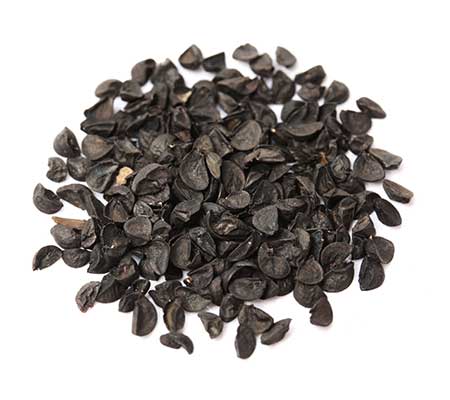
chive flower seeds

chive flower seeds Chives - Common | Mylar Packaged

Sale price$18.72 Regular price$20.80
Save 10%

Pay in installments of $5.20 with ShopPay, AfterPay and Klarna

Shipping Estimate
USA
  • USA
  • CAN

Ships within 48 hours · Estimated delivery Aug 23 - Aug 28

Promo Codes Available:

For Your Every Summer RSVP, with Code: SUMMER15

Description

chive flower seeds Chives - Common | Mylar PackagedPacked in Resealable Long Life Mylar Moisture Proof Packets 10+ Year Survival Seed Viability Category: Herb Type: Chives Variety: Common Family: Amaryllidaceae Botanical Name: Allium schoenoprasum Hardiness Zones: 3,4,5,6,7,8,9,10 Growing Difficulty: 2 Soil PH: 6. 0 to 7. 0 Fertilizer Requirements: 5 10 5 Soil Type: Rich, Moist, Well Draining Germination (days): 7 to 21 Soil Temp for Germination: 60 70F Lighting Conditions: FULL SUN, PART SHADE Days

Packed in Resealable Long Life Mylar
Moisture Proof Packets
10+ Year Survival Seed Viability

  • Category: Herb
  • Type: Chives
  • Variety: Common
  • Family: Amaryllidaceae 
  • Botanical Name: Allium schoenoprasum
  • Hardiness Zones: 3,4,5,6,7,8,9,10
  • Growing Difficulty:  2        
  • Soil PH:  6.0 to 7.0
  • Fertilizer Requirements:  5-10-5
  • Soil Type: Rich, Moist, Well-Draining
  • Germination (days): 7 to 21
  • Soil Temp for Germination: 60-70°F
  • Lighting Conditions: FULL SUN, PART SHADE
  • Days to Maturity:  60 – 90     
  • Planting Depth:  1/4”
  • Distance Apart (in row):  6"
  • Row Spacing: 12-24"


Sowing Instructions

DIRECT SOW AFTER DANGER OF LAST FROST

Starting Indoors

8-10 WEEKS BEFORE LAST FROST

Growing Tips

Chives do well anywhere in the garden and are commonly used as a decorative plant that is also edible.

Chives will grow almost anywhere that receives at least 6 hours of full sun (even indoors with a sunny window).

Chives do best when the receive frequent watering and consistently moist soil. Chives are an onion plant that will produce bulbs when left to continuously grow. Every few years, separate the bulbs to continue expanding your chives.

Companion planting chives with plants such as carrots, mustard plants, tomatoes, or even cabbage will repel many pests that would otherwise affect these plants.

Culinary Uses

The entire plant can be used from root to flower, depending on your dish.

This herb goes great in mashed potatoes, or as an onion flavor in a meat loaf or gravy.

Harvesting Crops

Use shears when harvesting your chives. Clip the chive stalks about two inches above the soil starting from the outside in. Do not cut the entire plant, instead you should selectively harvest to keep your chives producing consistently.

Harvesting Seed

Chives are a perennial herb and will continue to grow year after year. We recommend allowing some of your chives plants to flower and turn brown at the end of their growing season.

Chive seeds form inside of the flower heads after the flowers have started to fade and dry out. Allow the flower heads to partially dry on the stalk and clip them a couple inches below the flower. Simply shaking these flower heads into a paper bag will release the seeds.

Do not let the flowers fully dry, otherwise the seeds will simply blow away.

Shipping Notes
  • Free Standard Shipping on $100+ Orders to the USA.
  • Except Preorder products are shipped in 48 hours.
  • Delivery to the USA:
  1. Standard Shipping : 3-10 business days
  • If time is of the essence, please consider selecting expedited delivery for faster service.
Exchange/Return Notes
  • We offer a 30-day return/exchange service after receiving.
  • Final sale items are not eligible for returns or exchanges.
  • To process your return/exchange, please contact us at [email protected]
  • Please click here for more details>>> Return & Exchange Policy
SKU: 42352707720

Discover Niche Categories That Outsell chive flower seeds

Top-Converting Item to Boost Your Average Order

4.2 ★★★★★
Based on 7 reviews
Sort
Highest Rating
Newest First
Oldest First
Product Reviews
A
Verified Purchase
Auntie J
Lexington, US
★★★★★ 5
Tons of info!
Format: Paperback
If one wanted to be a real tracker, this book has everything needed. I just want to be able to recognize the local wildlife tracks. But having all the rest of the info is nice, and it's easy to take what I want. The book is well organized. Fantastic pictures, loads of information. It's interesting too, to see just how much knowledge goes into figuring out not only what animal it is, but what sex, age, gait, etc it is. This is an awesome book.
WAS THIS REVIEW HELPFUL?YesReportShare
Reviewed in the United States on January 18, 2025
A
Verified Purchase
Amazon Customer
Fort Morgan, US
★★★★★ 5
Caveats for the professional tracker
Format: Paperback, Format: Paperback
This is a most excellent resource, arguably the best single tracking book that exists (i would argue so, if i had to pick one! And i recommend this book often). However, if you are in a professional field where this legally matters (EIS or ESA decisions on wolverine/fisher/lynx, etc.), take heed: the authors’ methods of measuring tracks are confusing (i.e. - where is the line between substrate/mammal family to determine when claws or ‘posterior’ pads are or are not used in measuring tracks? ) Also, the claim that “an individual animal can show incredible variation in track size” (p.57) is very misleading… Foot size of an individual animal from birth to adult will obviously change, but will not change in a day for the same-aged individual animal regardless of whether it walks in mud or atop rock. The animal’s foot does not change in size, but its track might appear to. This perceived “change” could be easily avoided by using minimum outline measurements (which are not discussed in this book, but can be found in the work by J. Halfpenny and others). I understand their reasons, but please do not refer to this book for legally defensible measuring techniques of rare species!!!! Also please disregard the negative reviewer who said “it’s a very Mythological Approach to how animals move and walk (jsopel),”- they clearly don’t know what that word means… All in all a well-researched and fantastic book that comes from ample and legitimate experience. A great book and happy tracking!
WAS THIS REVIEW HELPFUL?YesReportShare
Reviewed in the United States on August 15, 2021
N
Verified Purchase
Naturelover
Natrona Heights, US
★★★★★ 5
A must have for wildlife lovers
Format: Paperback
Wow! What an excellent and thorough compilation of scat and tracks. Nice reference for when you take pics and bring the image back to the book for comparison. Also, great information about tracking.
WAS THIS REVIEW HELPFUL?YesReportShare
Reviewed in the United States on June 10, 2025
A
Verified Purchase
Allison
Lake Worth, US
★★★★★ 4
Good but index needs improvement
Format: Paperback
This is a good, comprehensive guide to tracks and sign. However, there is no index of where to find each family, so in order to find a species you have to flip through the entire book looking for the right page. This makes it annoying to use if you are trying to look up information on a particular species or family.
WAS THIS REVIEW HELPFUL?YesReportShare
Reviewed in the United States on April 2, 2026
E
Verified Purchase
ed calvin
Phoenix, US
★★★★★ 5
This is a very useful field manual for those interested in detailed traking methodology.
Format: Paperback
I spent many years as interpreter and ranger for the Colorado State Park System, now called CPW—Colorado Parks and Wildlife. We were annually tasked with surveying a given species' presence, density, and range in the park system and surrounding areas. Detailed field manuals were critical to the accuracy of our work, and HOW I WISH I HAD THIS BOOK DURING THAT PART OF MY CAREER. There are few other books I've come across providing detailed, yet very accessible information on how trail sign reflects animal behavior across different conditions, landscapes, and seasons (both weather seasons and mating seasons). One particular aspect of this book I found significantly intriguing was the section on predation—how does a mountain lion take down a mule deer vs. how wolves bring one down. The locations on a prey animal where a certain predator is most likely to attack, showing illustrations, is a remarkable piece of work, and there authors are clearly masters of interpreting tracks and sign! If you want learn about how mammals behave in their native environment, adding this book to your field manual packet will greatly expand your horizons! Busy it, read it, and get outside! Thank you Mr. Elbroch and Mr. McFarland for adding to the wildlife canon!
WAS THIS REVIEW HELPFUL?YesReportShare
Reviewed in the United States on August 5, 2023

recommand products